
Mobilizing the Whole Family to Serve
November 28, 2018
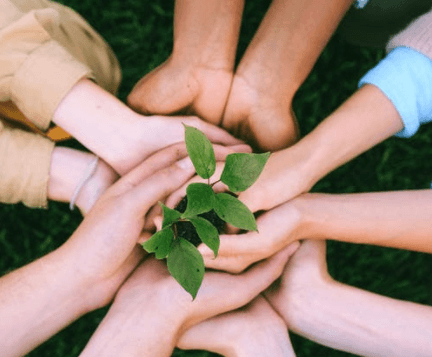
Modern parents are so busy, and with fewer children, they tend to try to meet every material want — yet they don't necessarily understand what their children truly need. Having raised two daughters, then, a decade later, two sons, I've moved in and out of the workforce and chosen at times to stay home, accompanying all four of them, amid the busyness, from infancy through the turbulence of their teenage years — riding that 'roller coaster' four times over, with more than a few reflections to show for it. For twenty years now, through weekly Family Time, my husband and I have learned to keep building all kinds of channels of communication with our children, turning conflict-laden issues into constructive discussion, and mobilizing the whole family to share together in the joy of growing.
All Hands On Deck: Reaching Out to Another Family
How do you persuade your children to willingly take part in family activities? Many parents want to know the secret — and if you have teenagers in the house, it seems even harder. Once, after speaking at a gathering for parents of teens, I met a couple who, like us, had four children. I naturally assumed they must feel the same way we did: a house that was often lively and chaotic, tiring but full of joy.
But it turned out, as they told me, they were a blended family — each spouse had brought a teenager into the marriage, and their approach was that whoever's child it was, that parent did the disciplining, while the child born after they married was raised jointly. That set off one family problem after another: the couple couldn't hold to consistent parenting principles, the children learned to work the gaps between them, and one of the children, who had autism, needed professional special-education support. From the way they talked, I could deeply feel how much helplessness and exhaustion filled their strained relationship with their children.
During one Family Time, I specifically raised that family for prayer, because I could see how much worry and burden was weighing on their shoulders. How could we care for them in a way that would really help? After a lively discussion, we decided as a family to host them for a generous lunch, so they could relax and enjoy some happy time together. I had often heard parents of teenagers say that whenever they went out to visit and care for others, they left their own children home alone because the kids didn’t want to come along. This time, though, when I proposed that our whole family mobilize together to reach out to another family, it struck a chord with everyone. We arranged to invite them over a month later; in the meantime, whenever there was a chance to meet, each of us went to build a friendship with our counterpart — parents with parents, children with children. Our third child even went online specifically to learn how to communicate with someone on the autism spectrum.
On the day the two families gathered together, our two sons took turns designing different activities to play with the kids. Our two daughters spent time with their two teenage girls, sharing about the immigrant experience, their school journeys, and what it's like carrying the responsibilities of being the older sister. The couple told me, quite moved, that they had never once been invited over to someone's home, and that they themselves were afraid to visit other people's homes, worried their child's special needs might cause trouble — especially since their two teenagers, coming from different original families, found it hard to get along and talk to each other. I could understand how hard it was for them, raising four children, and encouraged their whole family to be brave and step out. What I discovered was that, with a little preparation beforehand, hosting them really wasn't as difficult as we'd imagined.
All Hands On Deck: Serving at Church
Watching our family go from an idea to actually caring for another family together left me with a deep impression: parents need to become examples their children can learn from. Actions speak louder than words — a parent is like a coach, always right there beside the child, training and guiding them, building up their judgment and ability to adapt, and helping them form the right values along the way. Hosting another family, for instance, is a kind of service that has to come from a willing, joyful heart, with no strings attached.
Ever since that experience of serving as a whole family, we've often used Family Time to talk about different kinds of family activities, all aimed at moving the whole family to serve together, becoming partners with one another, and learning to walk in step together.
I remember back in 2013, when we were in Los Angeles, California, the whole family served together at church. Our second daughter helped with piano accompaniment and taught children’s Sunday school; our third child volunteered as a teacher for the drum class; and our fourth child helped with sound and computer operations.
In 2014, back in Toronto, we attended a Salvation Army church, where my husband and I served together on the worship team, and our two sons continued serving on drums. When the church needed extra volunteers for its monthly service at a seniors’ home, we stepped in right on time and were warmly welcomed; and every Friday night youth gathering, our youngest son mobilized alongside us again, serving children from across the community’s many ethnic and cultural backgrounds.
The Boys Step Up: Babysitting for the Neighbors
In another Family Time, we discussed the idea of our two teenage sons babysitting. They talked excitedly about their own ideas, while I offered analysis and feedback for them to consider.
Our neighbors had just had a baby boy in May 2014, and since both parents worked, the baby's grandmother had come from China to live with them and help care for her grandson. Toronto's winter was long, cold, and snowy, and with nowhere to go, they were stuck at home — so they invited our two sons to help out with the baby, giving the grandmother a chance to rest.
The two brothers transformed into super-babysitters. On one hand, they could read English picture books to the baby and play with him; on the other, since the grandmother wasn't confident in English, they could keep her company chatting in Chinese — truly killing several birds with one stone. They took turns going twice a week, an hour and a half each visit, and would swap notes with each other afterward — how to change a diaper, how to make the baby laugh. Sometimes they'd play piano for him, sometimes play hide-and-seek, or teach him to crawl. I loved hearing them go on and on about all the details of caring for a baby, and their plans for the pocket money they earned — they never seemed to tire of it. That was when I realized boys can make wonderful babysitters too, and can build character through it.
All Hands On Deck: Going Back to Taiwan for the Summer to Care for Grandma
Over these past few years of serving together as a family, we've watched God's hand, like a potter's, continually shaping each one of us into a vessel He can use.
Recently in Family Time, we discussed whether it would be feasible to move back to Taiwan to care for my ninety-year-old mother. She had lived with us before we ever immigrated to Canada, and eight years later, our relatives in northern Taiwan, after years of long-term caregiving, were deeply exhausted; we wanted to give them a chance to rest. After discussing it as a family, we planned to move back to Taiwan this summer for two years to be with my mother, and move back to Canada once our third child was heading into university. During the discussion, our two teenage sons said that having lived a year in the seminary dorm in Los Angeles, they now felt trained enough to adapt to living anywhere.
But just as we were about to start preparing to move back, relatives in southern Taiwan stepped forward at just the right time and offered to have my mother come live with them — so our plan changed from a two-year move to just arranging for one summer. God's plans truly are wonderful, and my heart is filled with gratitude.
In short, the channel of communication that Family Time provides has helped us keep our family's momentum strong no matter where we go, and has continually held our family together with a shared sense of belonging. I firmly believe God keeps handing us new questions in life, training us to push past our own limits, so that each person in our family grows more mature, becomes a blessing to many, and lets one family influence another — one life influence another.