
A Lesson in Life Education, Together with My Children
February 24, 2019
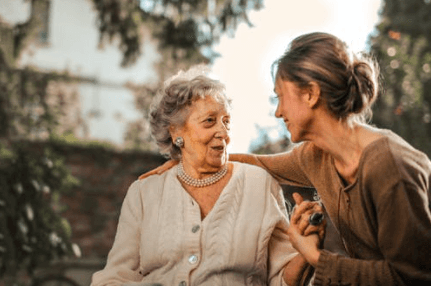
After my father passed away in 1999, my mother lived a quiet, independent life for seven years. Over the past decade or so, chronic illness made it impossible for her to keep living alone, so she began rotating between staying with her children, and along the way she also suffered a minor stroke that required long-term rehabilitation. Our whole family moved overseas in 2007, so naturally I had fewer chances to be with her. In recent years I’ve felt keenly that her remaining time is limited, and that I ought to spend more of it with her, so in 2013 I used one of our Family Time sessions to talk with the children about a plan to bring the whole family back to Taiwan that summer to be with their grandmother.
Lesson A: Building Adaptability
At first, the children gave every excuse to say no — round-trip tickets for the whole family were expensive, and summer in Taiwan would be brutally hot. So I explained the old saying, ‘The tree wishes to be still, but the wind will not cease; the child wishes to care for his parents, but they will not wait’ — honoring your parents can’t be measured in money, and it has to happen while they’re still with us. I also told the children how blessed they were; not everyone gets the chance to spend real time with their grandparents. In an aging society, this was a rare opportunity to understand an elderly person’s inner world. After a lively discussion, they finally agreed to support the summer trip to Taiwan, and came to a heartfelt conclusion of their own: ‘If we learn how to care for Grandma today, we’ll know how to care for Mom and Dad someday.’
For us, accustomed to life in Toronto, Taiwan’s brutal heat was quite a test. We had to shower three to five times a day just to cool off, and we had no fixed place to stay, bouncing around and staying with relatives and friends wherever we could. Apart from some summer camp activities, the children took turns spending time with their grandmother, each gaining their own experiences and lessons. Looking back now, they agree it was well worth it — it built up their toughness, their tolerance for heat and hassle, and their ability to adapt to whatever came their way.
Lesson B: Thinking About Life Direction
Our eldest daughter, who was in graduate school at the time, shared that in her later years Grandma had grown quiet and withdrawn. But she discovered a little secret: if you played a Bible-verse relay game with her — reciting familiar verses back and forth, one line at a time — Grandma would open right up, and she was so happy doing it.
Our second daughter shared that the days she spent accompanying Grandma to rehabilitation gave her a much deeper understanding of occupational therapy, and it was part of what led her to work as a social worker in a nursing home. That hands-on experience also pointed her toward further studies in occupational therapy, so she could help others who need to be rebuilt in body, mind, and spirit. She believes the career she’s chosen may not pay much, but it’s important work that few people are willing to do.
Our eldest son, still in middle school then, said that time spent with Grandma made him willing to join his school’s regular volunteer program at a nursing home. Our youngest son, meanwhile, took joy in serving the elderly on his own initiative, often going to nursing homes to play his trumpet and spend time with the seniors there.
Lesson C: When Parents Grow Old…
Over the past couple of years, serving with the Salvation Army church in Toronto, we’ve watched a group of people in their sixties and seventies faithfully serve an even older generation, week after week, rotating through different nursing homes, giving of themselves without a single complaint. It’s deeply moving, and I sometimes bring our two teenage sons along to join in.
During one Family Time, as we talked about our nursing-home ministry, our youngest son asked curiously, ‘Why do those old people live there instead of at home? Do they actually like living in a nursing home, or is there some other reason?’ I explained that some people choose it because there are so many peers there to learn from and encourage one another; others move in because their children can’t care for them nearby, or because they need professional nursing care they can no longer manage without. So for some it’s a choice, and for others it’s simply the only option left.
At that point, my son asked, ‘Mommy, when you’re older, would you rather live in a nursing home or live with me?’ I told him that if Mommy and Daddy are still able to take care of ourselves, and you and your siblings don’t mind, of course we’d love to live with you — though your future spouse would have to agree too. And it doesn’t have to be under the same roof; living nearby is enough. Watching our grandchildren grow up would be one of life’s great joys. But if the day comes when we truly can’t take care of ourselves, or need professional nursing care, we’d be perfectly willing to live in a nursing home or care facility, rather than become too great a burden on our children.
Lesson D: Choices About End-of-Life Care
In recent years, Grandma was in and out of the emergency room several times because of bacterial infections, and we could sense that her time was drawing near. We used our Family Time to talk again about what should happen when she reached the final stretch of her life — should she stay in a regular ward for aggressive treatment, or move to a hospice ward for comfort care to ease her pain?
Every time Grandma was rushed to the emergency room and admitted to the ICU, standard hospital procedure kicked in: a fever meant blood draws, a week of bacterial culture, then the right antibiotic chosen to match. But her blood-producing function was steadily failing, and over the course of a year the transfusions went from once a month, to once every two weeks, to once a week, and finally to twice a week. Because of her age, poor circulation made drawing blood difficult, and she ended up needled again and again, her whole body covered in bruises — it broke our hearts to watch.
We couldn’t help but question what all these frequent transfusions were really for — were they simply postponing death, or actually easing Grandma’s pain? In a regular ward, the medical staff’s job is to treat aggressively, aiming to cure the patient and send her home. In a hospice ward, the staff instead focus on comfort care, easing pain so the patient can live out her remaining time with quality and dignity.
Our extended family includes a number of medical professionals, and yet, when it came to making this decision for our own loved one, we found we couldn’t reach agreement in time — which was a real regret.
Our son felt that if the right medication could ease Grandma’s pain, that was certainly worthwhile, but once the frequent transfusions were seriously undermining her quality of life, we should consider stopping them. After all, living past ninety is already God’s grace, and we all agreed that if Grandma’s heart was ready to meet the Lord, we should let her sleep peacefully and spare her any unnecessary suffering. At the end of May 2016, Grandma really did pass peacefully — as though she had simply emigrated to make her home in heaven.
Lesson E: Reflections on a Funeral Dispute
When it came to arranging Grandma’s funeral, the hospital didn’t offer a space for a farewell service, so it had to be moved to a funeral home. But because of scheduling and space limits there, we could only book a small hall that held sixty people, from seven to nine in the morning. So we held a family-only memorial service at the funeral home, and the public memorial service was held the following day at the church.
To our surprise, this sparked questions from relatives and friends who weren’t believers — they mistakenly assumed that holding two services meant we, as Christians, were being unfilial, and that what really mattered was laying the deceased to rest. So they only attended the family memorial service and skipped the one at the church. What they didn’t realize is that, for Christians, a memorial service isn’t only about remembering the person who has died — it’s also for the living. Especially since Grandma lived her whole life devoted to the Lord, remembering her was a chance to display and testify to God’s glory, and to help people understand how Christians view death — how we can face and move through it with a living hope, because one day we will meet again in our heavenly home. All of this became material for further conversations with our children during our Family Time.
Caring for Grandma became a life-education class for our whole family. Even as her body grew weaker day by day, whenever we read the Bible with her, we could feel that her spirit was being renewed daily. It gave us and our children a much deeper reflection on life and death — the understanding that we are all God’s masterpiece, made to live for His glory and for the good of others, and that when we each reach our own unavoidable end in this life, we should be prepared to meet the Lord with calm assurance, peace, and joy.
Family Time Takeaways: On Life Education
1. Understand an elderly person’s inner world and daily life
2. Understand the difference between a regular ward and a hospice ward
3. Understand the meaning behind a Christian memorial service